

Latest News
-

Konvensi Nasional Rancangan Standar Kompetensi Kerja Nasional Indonesia (RSKKNI) Bidang Bank Perekonomian Rakyat (BPR)
Penguatan kualitas sumber daya manusia (SDM) menjadi salah satu bagian penting dalam mendukung…
-
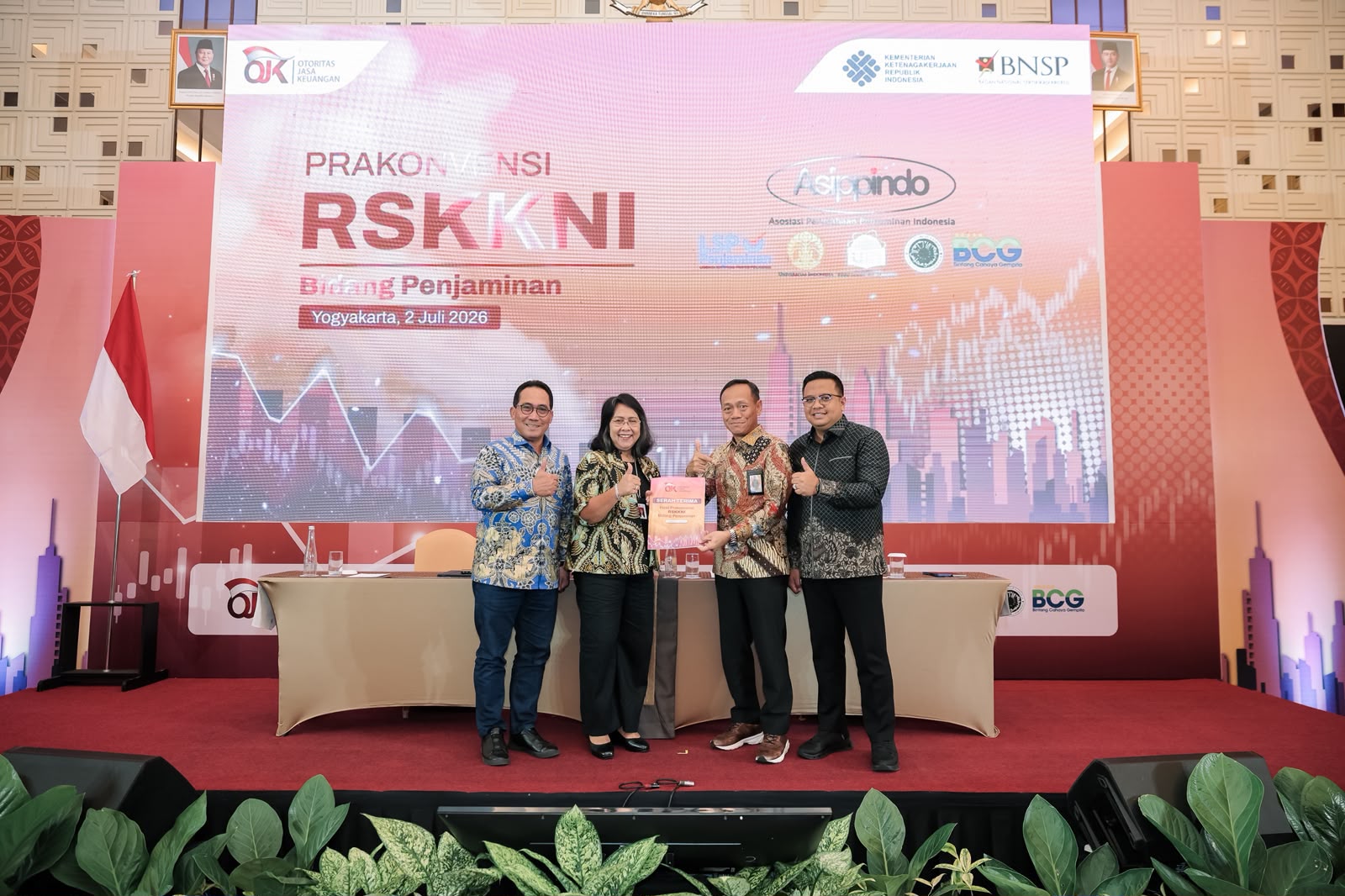
Prakonvensi Rancangan Standar Kompetensi Kerja Nasional Indonesia (RSKKNI) Bidang Penjaminan
Otoritas Jasa Keuangan (OJK) terus mendorong penguatan kualitas sumber daya manusia di sektor jasa…
-

Managers: The Bridge to Better Employee Financial Wellness
Managers: The Bridge to Better Employee Financial Wellness
-

Penutupan Program Pemagangan Nasional bersama Kementerian Ketenagakerjaan Republik Indonesia (Kemnaker RI)
Telah dilaksanakan kegiatan penutupan Program Pemagangan Nasional bersama Kementerian…
-

Prakonvensi Rancangan Standar Kompetensi Kerja Nasional Indonesia (RSKKNI) Bidang Bank Perekonomian Rakyat (BPR)
Prakonvensi Rancangan Standar Kompetensi Kerja Nasional Indonesia (RSKKNI) Bidang Bank Perekonomian…
Latest Infographics
-

INFOGRAFIS RISET OJK INSTITUTE EDISI FEBRUARI 2025
Riset ini menggunakan data primer dan sekunder.
-

INFOGRAFIS RISET OJK INSTITUTE EDISI NOVEMBER 2024
Riset ini menggunakan Fixed Effect Model (FEM) untuk menganalisis pengaruh ESG terhadap kinerja…
-

INFOGRAFIS RISET OJK INSTITUTE TAHUN 2023 EDISI OKTOBER 2024
Pada tahun 2023, tim riset OJK Institute menyusun riset yang berjudul “Analisis Determinan Adopsi…
-

INFOGRAFIS RISET OJK INSTITUTE TAHUN 2023 Edisi Juli 2024
Pada tahun 2023, tim riset OJK Institute menyusun riset yang berjudul “Forecasting Market Share…
-

The Influence of Reference Interest Rates on Sectoral Stock Prices in the Indonesian Capital Market OJK Institute Research Infographics for 2023
In 2023, the OJK Institute research team compiled research entitled "The Influence of Reference…
Managers: The Bridge to Better Employee Financial Wellness
- 24 Jun 2026
Many workers struggle with financial wellness. From managing day-to-day finances to handling unexpected expenses and building toward long-term goals like home ownership or retirement, workers are steering through financial hurdles — and bringing the stress with them to the office.
Nearly three-quarters (73%) of workers report experiencing stress related to their finances at least sometimes, according to The State of Financial Wellness: Challenges, Gaps, and Opportunities report from SHRM and Raymond James. Often, this stress impacts their work, with 39% of workers reporting their financial concerns affect their ability to focus at work.
Organizations are one source of support with total rewards that include benefits to build financial wellness. Yet many organizations struggle to connect employees to the resources already available. Facing the same economic headwinds as their workforce, organizational leaders can find it hard to add new programs. The good news? HR leaders can look to managers and the trusted relationships they cultivate to connect the right resources to the right needs.
What the Research Says
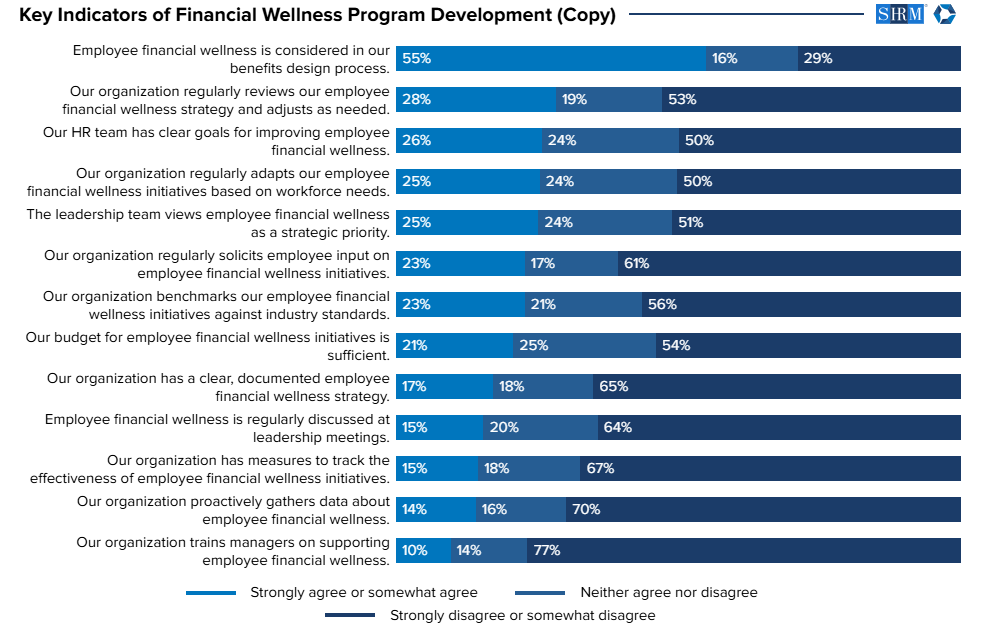
Organizations often offer financial wellness benefits, such as retirement accounts and health savings accounts, but they’re not always connected to other well-being initiatives. In fact, 64% of HR professionals reported financial wellness initiatives were either “completely separate from or only loosely connected to” other well-being initiatives. This underdevelopment of programs can lead to lost chances for employees to engage with their benefits.
“When financial wellness programs are separated from other well-being programs, or only tangentially connected, it's easy for employees to miss opportunities to engage with much-needed resources,” said Aaron Hollinger, senior researcher at SHRM.
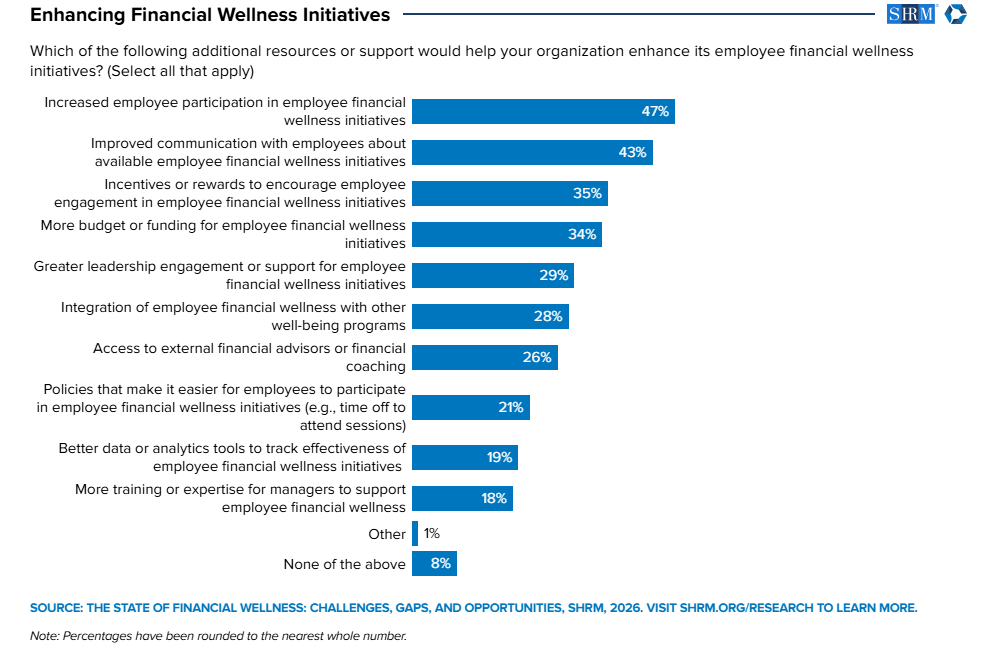
Beyond better integration, organizations can rely on managers to raise awareness of and engagement with these programs. HR leaders identified a need for stronger manager training, but managers can also serve as key components of communication plans. Improved communication ranked among the top five resources HR leaders identified to enhance financial wellness initiatives, cited by 43%.
With managers driving engagement, organizations can deploy resources more effectively — increasing engagement while controlling costs. That matters because organizations are not immune to the pressures their workers face. Tariffs, inflation, and shifting regulations make it difficult to overhaul programs. Building a bridge between existing resources and the employees who need them becomes even more critical. Managers stand as that bridge.
What Managers Can Do
“Managers play a critical role in supporting employee financial wellness,” said Lisa Watson, managing director of human resources at Virginia Housing in Richmond, Va. “They have a direct connection and typically the relationship with employees more than anyone else.”
Because of that close relationship, Watson explained, managers are better positioned to recommend resources — whether through an employee assistance program or other benefits within an organization's total rewards.
“By no means should we expect managers to become financial advisors,” Watson said. “However, we can equip managers with tools to recognize the signs when some may be struggling in general.”
HR leaders can help managers see themselves not as financial experts, but as empathetic leaders who create an environment of trust and psychological safety — one where workers feel comfortable asking for direction to the right resources.
Financial wellness will remain a pressing challenge, but the solution may already exist within your organization. Rather than building new programs amid tight budgets and economic uncertainty, HR leaders can activate managers as the connective tissue between existing resources and the employees who need them. By equipping managers to recognize signs of strain and foster psychological safety, organizations can strengthen engagement, maximize the value of current benefits, and support their people — no matter what economic pressures lie ahead.
News source from: SHRM
https://www.shrm.org/topics-tools/news/managers-bridge-to-better-employee-financial-wellness
Tags :
- HR
- HR